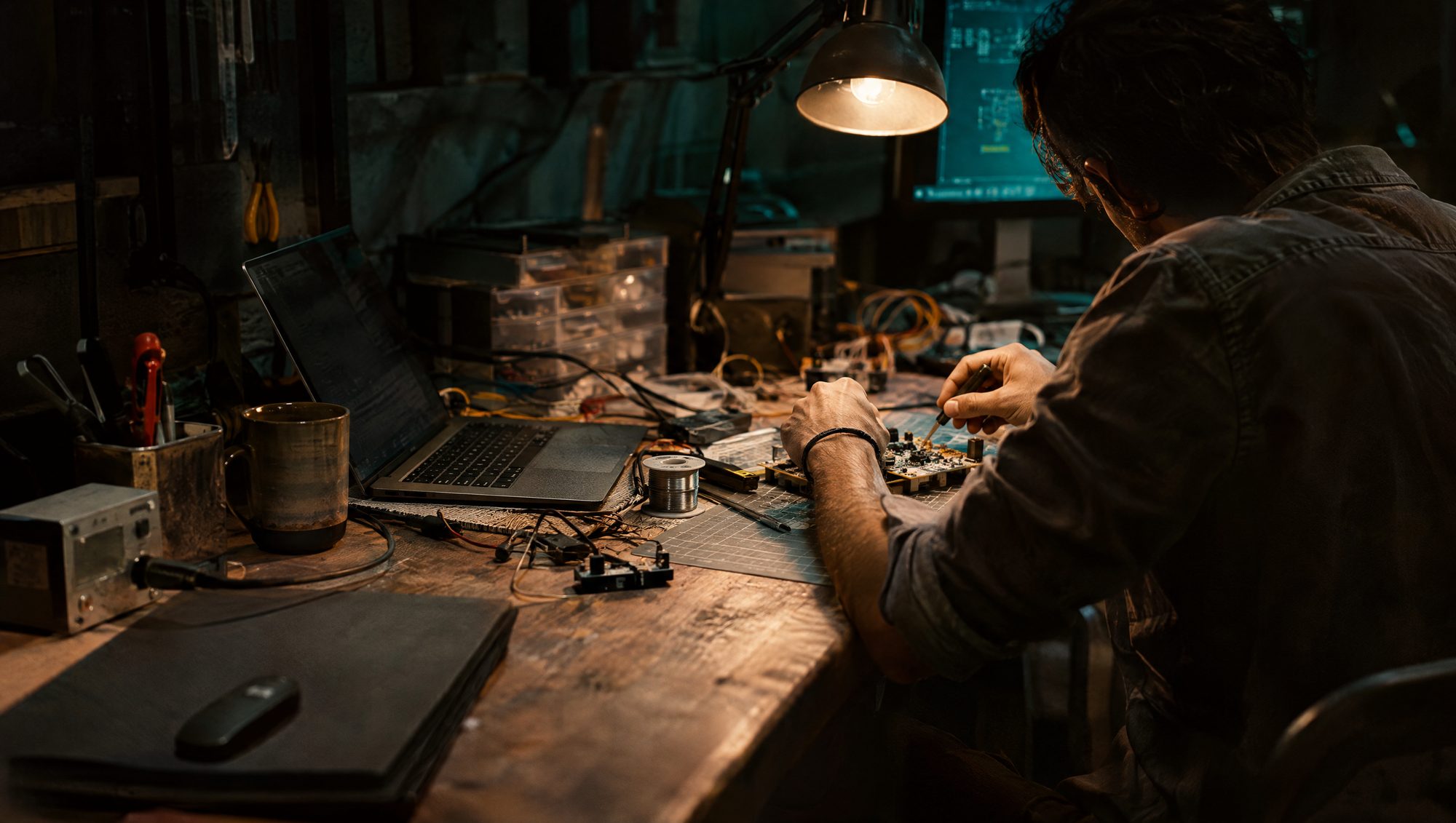
AI lowered the technical bar to building. It raised the bar on execution. The people who can actually ship, manage, source, and close are about to look very different from the people who can pitch.
There’s a sentence I hear at every demo day, every investor dinner, every LinkedIn post written by somebody under 30 with a beanie: I’m a founder. It used to mean something specific. It now means almost nothing. The next decade isn’t going to reward the title. It’s going to reward the work the title was supposed to describe.
For about fifteen years, “founder” was the most valuable label in tech. ZIRP made it that way. When money was free, the constraint on a company was its origin story, not its execution. So the market priced narrative. A solo founder with a deck could raise on conviction; a two-person team with a working prototype could raise on momentum. The cost of being wrong was measured in burn rate, not in survival.
That game ended somewhere between Q4 2022 and the first GPT-4 demos. Capital tightened. AI collapsed the cost of building a v1 of almost anything. What’s left, when the deck is cheap and the prototype is cheap, is the part that always mattered: shipping a real thing into the real world and keeping it alive.
The founder mythology stops scaling
The founder mythology was useful when capital was the bottleneck. It signalled risk appetite. It compressed a long, ugly job description into a single status marker an investor could nod at over coffee. The trouble is, the status marker is sticky. People keep wearing it long after the world stopped paying for it.
Walk through any seed-stage portfolio in 2026. You’ll find founders who can pitch but can’t hire. Founders who closed a round but can’t close a sales call. Founders who launched a product but can’t keep the third hire from quitting. The bottleneck is no longer convincing somebody to fund the idea. The bottleneck is doing the next eighteen things, none of which are pitching.
Sam Altman is technically a founder. Functionally he’s a builder. He hires. He raises. He ships. He negotiates. He communicates. The “founder” label hides the work and lets the work look glamorous in retrospect. It doesn’t tell you anything useful about whether you should work for him, fund him, or build alongside him. The work tells you that.
The bottleneck is no longer convincing somebody to fund the idea. The bottleneck is doing the next eighteen things, none of which are pitching.
AI doesn’t kill execution. It rewards it.
The naive read on AI is that it makes founders more powerful. One person can now build what used to take five. That’s true, and it’s also irrelevant to the question of who wins the decade.
Yes, the technical barrier to building software has collapsed. Anybody with a credit card and a weekend can ship a passable SaaS. Which means software, as a category, is no longer the moat. The moat moved. It’s now in the parts of the business that AI doesn’t touch. Or, more honestly, the parts it touches badly. Regulatory navigation. Hiring. Supply chain. Distribution. Customer success at scale. Trust.
I run a manufacturing arm in Shenzhen, a construction-ops platform in Lisbon, and an AI tool that touches both. The Shenzhen operation is the one that’s hardest to copy. Not because PCB design is hard. It isn’t, anymore. Because knowing which factory will hit a tolerance spec on the third re-spin without ghosting you takes a decade of relationships. AI doesn’t have those relationships. It can summarize them. It can’t earn them.
So when somebody tells me AI killed the builder, I hear the opposite. AI killed the part of the job that builders were already bad at: assembling the deck, writing the spec, generating the first draft of the pitch. It left untouched everything builders do well: deciding, sourcing, negotiating, escalating, firing, mediating, shipping anyway.
What builders actually do
The job is unglamorous in a very specific way. Most of it is small decisions made fast, with incomplete information, while three other things are also on fire. The skill is not in any one decision. It’s in the throughput.
A builder I respect once told me his job was “to be the most boring person in the building.” He meant it as a compliment to himself. The dramatic moves happen because the boring moves happened first. The deal closes because the contract was drafted, the team was hired, the wire was pre-cleared, the bank knew what to expect on Tuesday morning. None of that shows up in a podcast interview. All of it is the work.
The builders I watch most carefully share a few traits, and none of them are charisma:
- They ship before the deck is polished. The deck is for capital; the product is for users; the two should never be confused.
- They fire fast and apologise once. Carrying a wrong hire for three more months is more expensive than the awkwardness of a Tuesday-morning conversation.
- They own their supply chain, whether the supply is silicon, talent, distribution, or attention.
- They build the second city before the first one fully works. Single-geo companies don’t survive a real shock.
- They negotiate without flinching. Most people leave money on the table because they’re afraid of a small social pain. Builders have made peace with that pain.
The decade that’s coming
The next ten years are going to be ugly for a specific kind of founder. The kind whose advantage was access to capital. The kind whose product was their personal story. The kind who outsourced execution because execution was unsexy.
They’re going to be excellent for builders: the people who already knew the work was the work. AI gives builders leverage they’ve never had. A single builder with a sharp Shopify ops layer, three good agents, a Shenzhen contact list and a working understanding of EU compliance can run a business that ten years ago would have needed forty people. That’s the unlock.
If you want to look at a company and predict whether it survives the decade, stop reading the bio. Read the calendar. Read the org chart. Read the supplier list. Read the regulatory exposure. Read the things the founder doesn’t tweet about. That’s the part that’s going to compound.
Founders pitch the company. Builders run the company. In a world where pitching is free and running is hard, the second one is worth a lot more.